


Die Holder Set, MT2 Tailstock
Die Holder Set, MT2 Tailstock
Out of stock
SKU:6155Shelf Location: (A08 - 02)
Couldn't load pickup availability
Key Features
Key Features
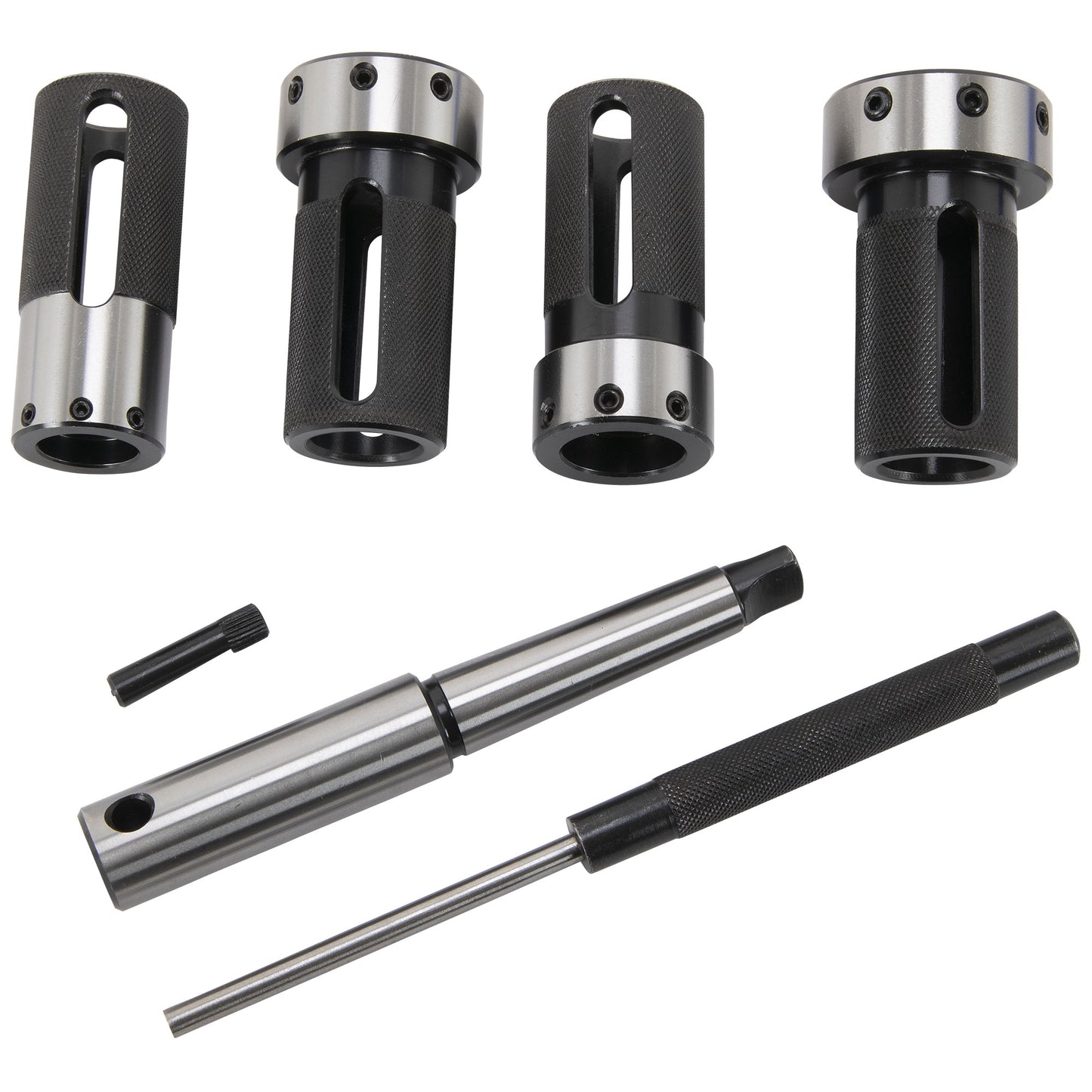
- The set includes tapered shank, pin punch, and 13/16", 1", 1-5/16" & 1-1/2" die holders
- 2MT Tang shank
- Easy to swap out using the provided pin punch.
- Comes in a fitted case
Share
WARNING: This product can expose you to chemicals known to the State of California to cause cancer and birth defects or other reproductive harm. For more information go to www.P65Warnings.ca.gov.
View full details

Product Information
Description
This manual-following die holder goes in the tailstock of the mini lathe, or any other lathe with a 2 Morse taper tailstock. Intended for hand turning workpiece or lathe running very slowly (50-100 rpm). Die holder has about 1-1/2" travel.
On smaller work the pin can be removed so the die holder can be hand fed and will spin freely at end of cut (when not held) For most other work, The pin rides in the slot and prevents the die body from spinning with the work while still allowing the die to feed itself along the thread. As the die cuts, it advances at exactly the thread pitch, and the holder slides forward in the slot rather than being forced by the tailstock.
The set includes the following four die holders: 13/16", 1", 1-5/16" & 1-1/2" and a pin punch. Die holder sleeves have 3 set screws to secure the appropriately sized die.
* NOTE: This lathe die holder tool does not work with hexagonal dies. Hexagonal dies are not made for creating new threads, they are for maintenance work.
Chris' Tips
Common Mistakes when using manual-following die holder
- Continuing to crank the tailstock after the die is cutting.
- Running too fast.
- Using dry dies on steel.
- Starting on a square edge without a chamfer.
- Installing the die backward.
Here's an example of the basic process.